A K-drama may have 8, 12, 16, 20, or more episodes, but the number alone does not tell you how long the series will take to finish. Release frequency, episode length, regional licensing, subtitles, and occasional schedule changes all affect when you can actually watch a new episode. This guide explains the patterns without assuming that every drama follows the same timetable.
The quick answer
Many modern Korean dramas are built as a single season with a planned ending. A 16-episode drama released twice a week usually runs for about eight weeks. A 12-episode drama released twice a week usually runs for about six weeks. Streaming-first series may use shorter seasons or release several episodes at once. Daily and weekend family dramas can be much longer.
Treat those numbers as useful patterns, not rules. The official broadcaster or streaming-service title page should always be your final source for the current episode count and release calendar.
Why episode counts differ
K-dramas are produced for several different release models. A prime-time television drama is often organized around a fixed weekly broadcast slot. A streaming original may be designed for a shorter, faster season. A family drama can run for months, while a special series may tell its story in only a few episodes.
- 8 episodes: often a compact streaming series, genre experiment, or tightly focused story.
- 10–12 episodes: common for shorter contemporary dramas and some streaming originals.
- 16 episodes: a familiar structure for romance, workplace, fantasy, and mystery dramas.
- 20 or more episodes: more common in historical epics, family stories, and productions with broader casts.
- Daily or weekend series: these may have dozens of episodes and use a different production rhythm.
Episode length also matters. One service may present a broadcast installment as a single 60-to-80-minute episode, while another listing may divide similar material into shorter parts. That is why two databases can appear to disagree even when they cover the same story.
The most common release patterns
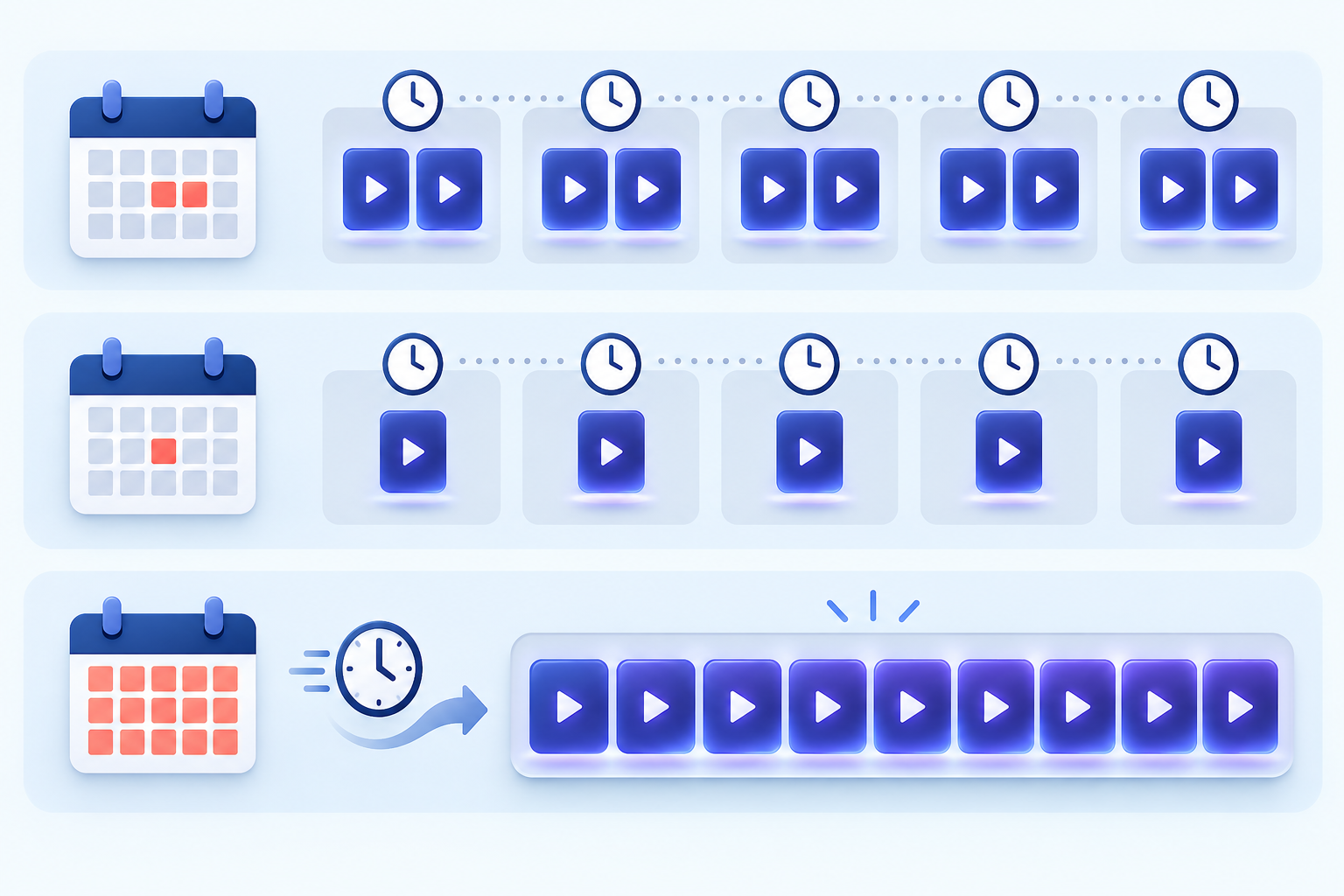
| Release pattern | What it usually means | What to check |
|---|---|---|
| Two episodes per week | Often consecutive days, such as a weekend or midweek pair | Local broadcast time and your region’s upload time |
| One episode per week | A longer viewing window between installments | Whether the platform labels the date in your time zone |
| Full-season release | All episodes become available together | Whether every episode has your preferred subtitle or audio track |
| Split release | A season arrives in two or more batches | The announced date for the next part |
| Daily or weekend broadcast | More episodes and a longer overall run | Holiday interruptions and regional licensing |
Broadcast time is not always streaming time
The Korean broadcast time and the international streaming time are not necessarily identical. A platform may upload the episode after the television broadcast ends, after subtitles are ready, or at a fixed global release time. The delay can vary by country and by title.
Before waiting for a specific hour, confirm that you are looking at the listing for your own country. Our guide on how to find where a K-drama is streaming in your country explains how to verify the correct title, legal service, and regional availability.
Why a new episode can appear late
- Subtitle production: translation, timing, and quality review take time.
- Regional rights: the same title may have different release arrangements in different markets.
- Broadcast changes: special programming, live sports, holidays, or production issues can move an episode.
- Platform processing: video, captions, age ratings, and metadata may not update simultaneously.
- Time-zone confusion: a Korean date may become the previous or next calendar date where you live.
A missing episode does not automatically mean that your subscription is broken. Check the platform’s episode list, official social account, or help page before changing plans or paying for another service.
Subtitles and dubbing may follow different schedules
English subtitles may appear with the episode, shortly afterward, or on a different schedule in some regions. Dubbing generally requires additional production and may be released later or only for selected titles. Closed captions and subtitles are not always the same track.
If language options are important to you, use our K-drama subtitles vs. dubbing guide to compare original audio, translated subtitles, SDH/CC, and dubbed tracks before you commit to a series.
A five-step release schedule check
- Confirm the exact title. English titles can differ across services, so compare the Korean title, cast, and artwork. If the platform names do not match, use our guide to identifying the right K-drama when English titles differ.
- Check the total episode count. Use the official title page rather than an old preview article.
- Identify the release model. Look for weekly, twice-weekly, full-season, or split-part language.
- Set the correct region and time zone. Make sure the service is showing availability for your location.
- Verify the language track. An episode may be online before your preferred subtitles or dub is ready.
Should you watch weekly or wait to binge?
Weekly viewing reduces the risk of accidental spoilers only if you can keep up with the schedule, and it can make discussion with other viewers more enjoyable. Waiting to binge gives you control over pacing and helps avoid uncertainty caused by schedule changes. Neither method is better for everyone.
If you decide to wait, note the expected finale date but check it again near the end of the run. A planned schedule can change. Also remember that a “finale” may refer to the end of one part rather than the complete story when a series uses a split release.
If a listing uses “Season 2,” “Part 2,” “special,” or “spin-off,” our guide to K-drama seasons, parts, specials, and spin-offs explains what each label usually means and the safest viewing order.
Frequently asked questions
Are all K-dramas 16 episodes?
No. Sixteen episodes is a recognizable format, but shorter 8-to-12-episode seasons, longer historical dramas, daily series, and split streaming releases are all common enough that you should verify each title.
Why does a platform show a different episode count?
The service may divide long broadcast installments into shorter parts, combine parts, count specials, or display only the episodes currently licensed in your region.
Can a release date change after it is announced?
Yes. Broadcast programming, production circumstances, holidays, and platform decisions can change the schedule. Recheck the official title page close to release day.
When you want to know whether every planned episode and subtitle is ready now, follow our spoiler-free guide on how to tell if a K-drama is fully released.
Final checklist
Before starting a K-drama, record four things: the total episode count, release days, your local upload time, and available language tracks. That small check prevents most confusion and helps you decide whether to follow the series weekly or wait for the finale.
Availability and schedules can change. Always verify the latest information on the official broadcaster or licensed streaming service for your country.